Pharmaceutical manufacturing requires stringent cleanliness and sterility standards to ensure product safety and compliance with regulatory guidelines. Contamination in any stage of production can lead to compromised drug efficacy, regulatory violations, and potential risks to patients. To address these challenges, CIP (Clean-in-Place) and SIP (Sterilize-in-Place) systems have become essential components in modern pharmaceutical facilities.
The in-situ CIP-SIP system plays a crucial role in maintaining hygiene, reducing downtime, and improving efficiency in pharmaceutical production. By enabling automatic cleaning and sterilization without disassembling equipment, these systems streamline operations while ensuring the highest level of sterility.
This blog post explores the importance, working principles, key components, benefits, and best practices of in-situ CIP-SIP systems in pharmaceutical manufacturing.

What is an In-Situ CIP-SIP System?
The in-situ CIP-SIP system is an automated cleaning and sterilization process designed to maintain pharmaceutical equipment in a sterile and contamination-free state. This system ensures that manufacturing vessels, piping, bioreactors, and other process components meet hygiene standards without requiring manual intervention or disassembly.
- CIP (Clean-in-Place): A method that removes residues, contaminants, and microorganisms from internal surfaces of processing equipment using cleaning agents, water, and mechanical action.
- SIP (Sterilize-in-Place): A sterilization technique that eliminates all microbial life, typically using steam, chemical agents, or hot water, to maintain a sterile environment before production begins.
The combination of CIP and SIP in an in-situ system allows pharmaceutical manufacturers to automate cleaning and sterilization, reducing downtime while maintaining compliance with cGMP (current Good Manufacturing Practices) and other industry regulations.

Why is the In-Situ CIP-SIP System Essential in Pharmaceutical Manufacturing?
Pharmaceutical products require strict sterility and cleanliness to ensure patient safety. Any residual contaminants can lead to product degradation or cross-contamination, impacting both quality and efficacy. An in-situ CIP-SIP system offers multiple advantages:
- Regulatory Compliance
- Meets global pharmaceutical regulations, including FDA, EMA, USP <797>, USP <800>, and ASME BPE standards.
- Ensures consistency and repeatability in cleaning and sterilization processes.
- Enhanced Product Safety
- Prevents microbial contamination, ensuring that drugs remain safe for consumption.
- Eliminates residues from previous production batches, reducing the risk of cross-contamination.
- Operational Efficiency
- Eliminates the need for manual cleaning, reducing labour costs and human errors.
- Reducing downtime by allowing fast and effective cleaning between production cycles.
- Cost Savings
- Lowers water, detergent, and energy consumption compared to traditional manual cleaning methods.
- Extends the lifespan of equipment by minimizing wear and tear caused by manual handling.
- Improved Process Control
- Automated monitoring ensures precise control over cleaning and sterilization parameters.
- Reducing variations in cleaning efficiency by following predefined protocols.

How Does an In-Situ CIP-SIP System Work?
The in-situ CIP-SIP system follows a structured sequence of steps to ensure that all internal surfaces of processing equipment are thoroughly cleaned and sterilized. Below is a step-by-step breakdown of each process:
Step 1: Cleaning-in-Place (CIP) Process
The CIP system removes all residues and contaminants from equipment using a combination of chemical agents, temperature, and mechanical force. The process typically involves:
- Pre-Rinse
- Equipment is flushed with water to remove loose particles and residues.
- This step helps in reducing the required concentration of cleaning agents.
- Detergent Cleaning
- A chemical cleaning solution (alkaline or acidic) is circulated to break down organic and inorganic residues.
- The type of cleaning agent depends on the nature of the residues (e.g., proteins, fats, or mineral deposits).
- Intermediate Rinse
- After detergent cleaning, water is used to remove any remaining cleaning agents.
- This step prevents chemical residues from interfering with the sterilization process.
- Final Rinse with Purified Water
- Equipment is rinsed with sterile water or water-for-injection (WFI) to ensure complete removal of any remaining residues.
Step 2: Sterilization-in-Place (SIP) Process
Once the CIP process is completed, the SIP process ensures that all microorganisms are eliminated from the equipment. This is typically done using saturated steam, but other sterilization methods may also be used.
- Steam Introduction
- Steam is introduced into the system at a controlled temperature and pressure.
- The standard sterilization temperature is 121°C (250°F) for 15–30 minutes, depending on the equipment.
- Holding Phase
- The sterilization process is held at a specific temperature and pressure to ensure complete microbial inactivation.
- Sensors continuously monitor parameters to ensure effective sterilization.
- Cooling and Drying
- After sterilization, the system is cooled using sterile air or water.
- The equipment is then dried to prevent condensation, which could lead to contamination.

Key Components of an In-Situ CIP-SIP System
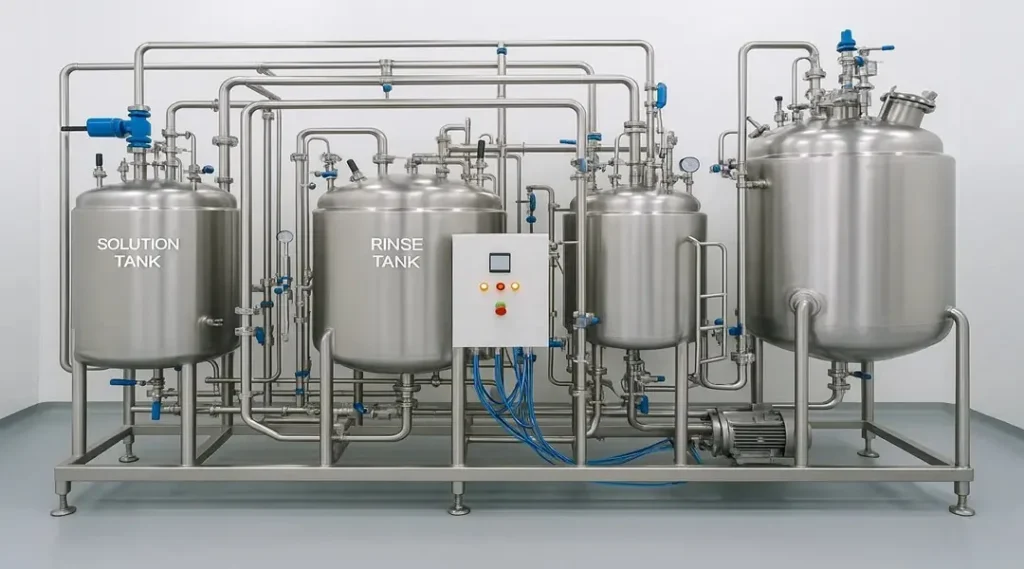
An in-situ CIP-SIP system consists of several integrated components that work together to ensure thorough cleaning and sterilization:
- CIP/SIP Tanks
- Hold cleaning agents, sterile water, or steam for the process.
- Pumps and Piping System
- Circulate cleaning and sterilization fluids throughout the equipment.
- Spray Balls and Nozzles
- Distribute cleaning agents evenly across vessel interiors.
- Control and Monitoring System
- Automated sensors track temperature, pressure, flow rate, and cleaning cycle duration.
- Steam Generator
- Provides sterile steam for the SIP process.
- Filtration System
- Ensures that incoming steam or cleaning solutions are free from contaminants.
Best Practices for Optimizing CIP-SIP Systems
To maximize the efficiency and effectiveness of an in-situ CIP-SIP system, pharmaceutical manufacturers should follow these best practices:
- Regular System Validation
- Conduct routine validation tests to ensure that cleaning and sterilization meet regulatory standards.
- Optimize Cleaning Agent Concentration
- Use the appropriate concentration of cleaning chemicals to remove residues without damaging equipment.
- Monitor Critical Parameters
- Track temperature, pressure, and cleaning time to ensure each cycle is effective.
- Implement Automated Controls
- Use an automated control system to maintain consistency and prevent human errors.
- Minimize Water and Energy Consumption
- Optimize cleaning cycles to reduce resource usage while maintaining effectiveness.
- Train Personnel on Proper Procedures
- Ensure operators are trained in using and maintaining the CIP-SIP system correctly.
FAQ’s
1. What is an In-Situ CIP-SIP System?
An In-Situ CIP-SIP (Clean-in-Place & Sterilize-in-Place) system is an automated process used in pharmaceutical and biopharmaceutical manufacturing to clean and sterilize equipment without disassembly. CIP removes residues and contaminants, while SIP eliminates microorganisms using steam or chemical sterilization, ensuring sterile conditions for drug production.
2. What are the Benefits of Using an In-Situ CIP-SIP System?
An In-Situ CIP-SIP system offers several benefits, including:
✔ Increased efficiency – Reduces downtime between production cycles.
✔ Enhanced sterility – Eliminates contamination risks.
✔ Regulatory compliance – Meets FDA, cGMP, and ASME BPE standards.
✔ Cost savings – Reduces labor, water, and chemical usage.
✔ Automation & consistency – Ensures repeatable and validated cleaning & sterilization.
3. How Does an In-Situ CIP-SIP System Work?
- CIP (Cleaning-in-Place): Uses water, detergents, and mechanical action to remove residues from equipment.
- SIP (Sterilization-in-Place): Introduces high-temperature steam or chemical sterilant to kill microorganisms.
- The process is fully automated and monitored to ensure proper cleaning and sterilization.
4. Which Industries Use In-Situ CIP-SIP Systems?
These systems are widely used in industries requiring strict hygiene and sterility, such as:
✔ Pharmaceuticals & Bio-Pharmaceuticals – Ensures contamination-free drug production.
✔ Food & Beverage – Prevents bacterial growth in processing lines.
✔ Dairy & Brewery – Maintains sterile conditions in milk, beer, and other liquid processing.
✔ Cosmetics & Personal Care – Keeps lotions, creams, and serums free from microbial contamination.
5. Why Should You Choose an Automated In-Situ CIP-SIP System?
An automated In-Situ CIP-SIP system reduces human error, improves efficiency, and ensures regulatory compliance. It also offers real-time monitoring, consistent cleaning cycles, and cost-effective operation, making it an essential solution for sterile manufacturing.
Conclusion
The in-situ CIP-SIP system is an important tool in making medicines, helping keep equipment clean, safe, and following all the rules. These systems make cleaning and sterilizing much easier by doing it automatically, which helps avoid mistakes, reduces the chance of contamination, and makes the whole process run more smoothly.
As technology keeps improving, these systems are getting better at saving money and working even more accurately. When companies use a good CIP-SIP system and take care of it, they can be sure that their products are safe and clean.
If you’re wondering how to pick the best CIP-SIP system for your company, feel free to reach out!
Why Choose Esteril – The Industry Leader in Sterile Processing Solutions
At Esteril, we set the gold standard for CIP-SIP systems and sterile processing solutions in the country. With cutting-edge technology, cGMP compliance, and adherence to FDA, ASME BPE, and USP standards, we ensure precision, efficiency, and unmatched reliability. Our expertise in pharmaceutical manufacturing guarantees superior contamination control and seamless integration into your operations.
Trust Esteril for top-tier quality and compliance-driven solutions. Contact us today to discuss your requirements! Call us now or send an inquiry via email—our team is ready to assist you. Visit our website for details!