Revised Schedule M is no longer something to prepare for. It is the GMP standard every licensed drug manufacturer in India is now inspected against.
Large manufacturers had to comply by June 2024. MSME units were given until 31 December 2025, but only if they applied for an extension with an upgrade plan. Most did not. Industry reporting puts the number of MSME units that applied at roughly 1,600 to 1,700 out of more than 8,500, which means the majority have been open to inspection under the revised rules since January 2026. The DCGI has also said no further extensions will be granted.
Much of the upgrade conversation has focused on quality systems and documentation. But a large share of what an inspector looks at sits on the production floor: the vessels, the piping, the cleaning systems and the records that prove they work as intended. This article looks at revised Schedule M from the equipment side.
What revised Schedule M expects from equipment
Revised Schedule M covers good manufacturing practices and the requirements of premises, plant and equipment. For process equipment, the expectations fall into four areas that inspectors return to repeatedly.
- Design and construction. Equipment should suit its intended use, be easy to clean, and not add anything to the product.
- Cleaning. Cleaning should be effective, repeatable and documented, so a batch changeover can be shown to be under control.
- Qualification. Equipment should be qualified before use, with records that show it was installed and performs as specified.
- Records and data integrity. Where equipment is automated, the data it produces should be reliable, protected and traceable.
None of these are new ideas. What has changed is that they are now enforced across the whole industry, including smaller plants that were previously inspected against the older version of Schedule M.
Manufacturing and holding vessels
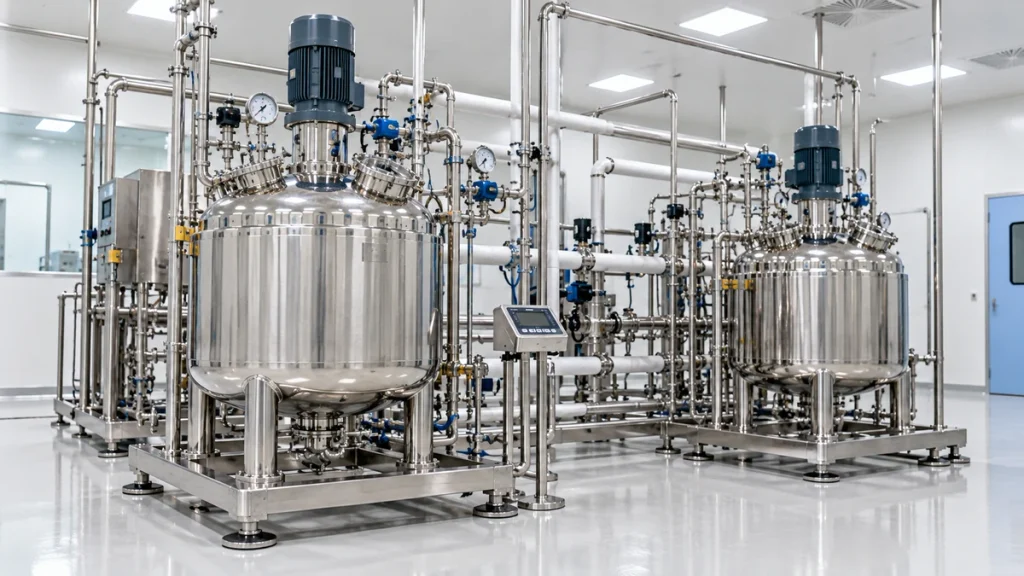
The vessel is where product quality is most directly at risk, so it is where an inspector will look first. The questions are practical. What is the contact material? What is the surface finish, and is there a record of it? Can the vessel be cleaned and drained properly? Can you prove how much material went in and out?
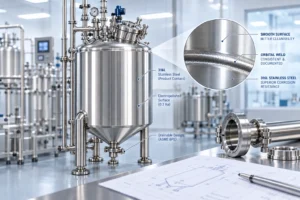
At Esteril, manufacturing and sterile holding vessels are designed to cGMP. Contact parts are SS 316L, electropolished up to 0.3 Ra, and non-contact parts are SS 304. Vessels can be specified with bottom or top driven stirrers or a high shear mixer depending on the process, and load cells support precise transfer. Vessels are built to be CIP/SIP capable.
For an older plant, the gap is often not the vessel itself but the paperwork behind it. A vessel with no surface finish record or material traceability is harder to defend in an inspection than one with a complete file. See our manufacturing vessel skids and sterile holding vessel skids .
Cleaning and sterilisation
Manual cleaning depends on the operator. That makes it difficult to show that every cleaning cycle achieved the same result. Automated Cleaning-In-Place (CIP) and Sterilization-In-Place (SIP) take that variation out and produce a record of each cycle.
Esteril designs and builds mobile and fixed CIP/SIP units, from portable systems up to large multi-tank installations, in automated or semi-automated form. A typical system includes supply and return pumps for recirculation, online acid and alkaline dosing, and a PLC control panel with time and temperature control. Cleaning coverage is verified with a riboflavin test, and every cleaning and sterilisation cycle produces a documented output. That record is what turns “we clean the vessel” into evidence an inspector can review.
If you are adding CIP/SIP to an existing line rather than replacing equipment, see our CIP/SIP systems .
Automation and data integrity
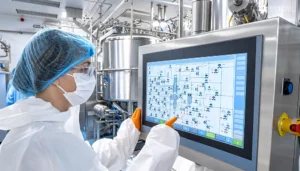
Revised Schedule M puts more weight on data integrity than the old version did. For automated equipment, that means the system should control who can do what, record what was done, and protect the data it creates.
Esteril’s automation is built to USFDA 21 CFR Part 11 and GAMP 5 guidelines. Systems include HMI or IPC for centralised control, electronic batch records (EBR), an audit trail and a backup facility, on Siemens, Schneider, Allen Bradley or Mitsubishi platforms. Part 11 is a US regulation, not part of Schedule M, but a system designed to it already covers the controls most inspectors look for. More on our pharmaceutical automation.
The documents that carry the most weight
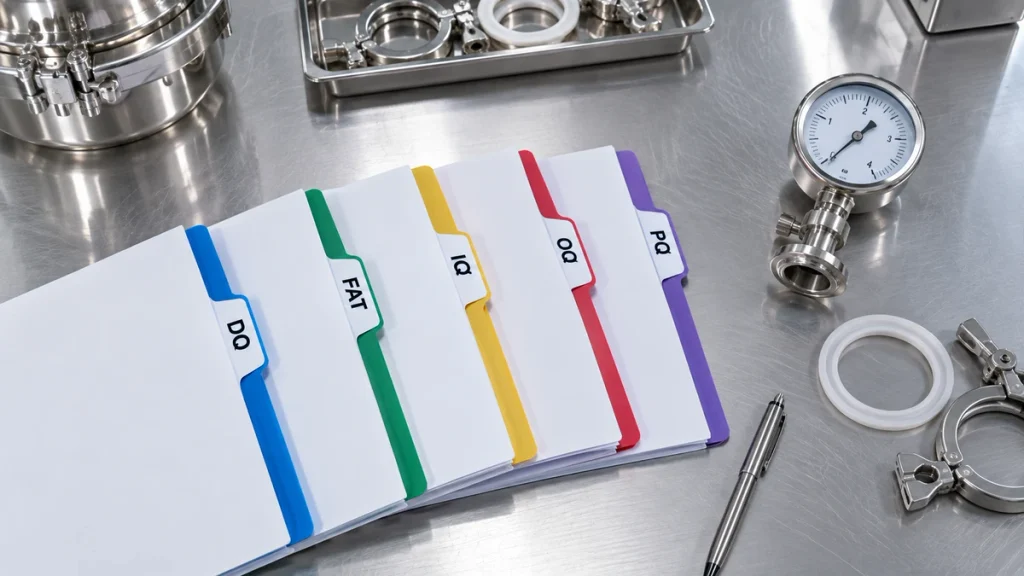
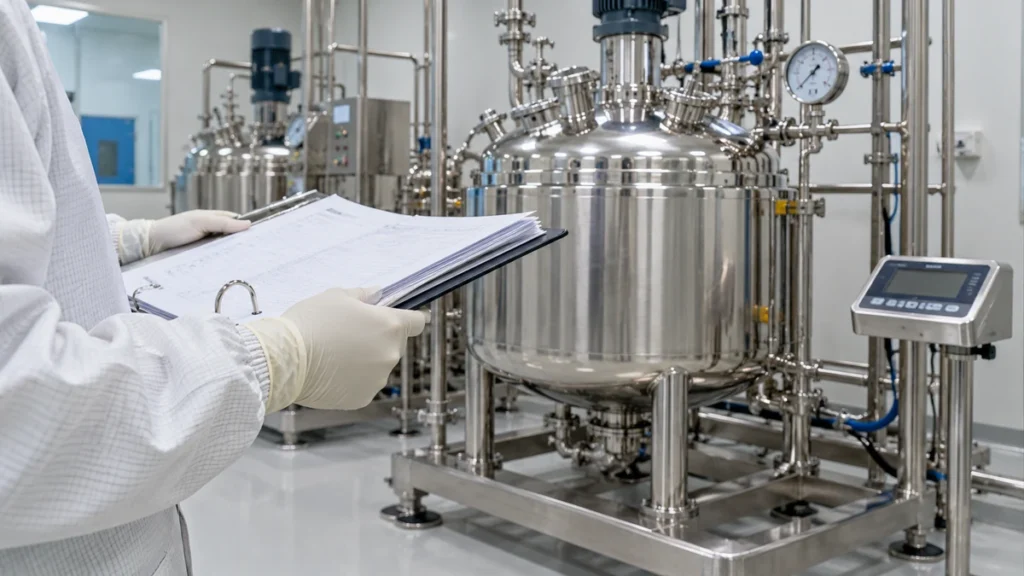
In an inspection, equipment that works but cannot be shown to work is a finding. The documentation package matters as much as the steel. For every system Esteril delivers, the package includes:
| Document | What it shows |
| DQ (Design Qualification) | The design meets your User Requirement Specification |
| FAT (Factory Acceptance Test) | The system was tested and performed as specified before it left the factory |
| IQ (Installation Qualification) | It was installed correctly at your site |
| OQ (Operational Qualification) | It operates as intended across its range |
| PQ (Performance Qualification) | It performs consistently in real production |
FAT is carried out at Esteril’s dedicated testing facility of more than 10,000 sq ft before the equipment is shipped. After OQ, Esteril hands over the final approved programmes and editable drawings, so your team holds the records for the life of the equipment. Read more in our guide to FAT and SAT .
Upgrade or replace: questions to ask first
Not every Schedule M upgrade needs new equipment. Before you decide, work through these with your QA and engineering teams:
| Question | Why it matters |
| Do we have material and surface finish records for each vessel? | Missing records are a common reason older equipment is hard to defend |
| Is cleaning manual, and can we show each cycle was effective? | Automated CIP/SIP produces a record of every cycle |
| Is automated equipment recording who did what, and when? | Data integrity is a larger focus than before |
| Do we hold DQ, IQ, OQ and PQ for each system? | Qualification gaps can often be closed without replacing equipment |
| Will a retrofit cost more than a new, qualified system? | Sometimes the documentation effort outweighs the savings |
Frequently Asked Questions
Does revised Schedule M mean I have to replace my equipment?
Not automatically. It depends on whether your existing equipment meets the requirements and whether you have the records to show it. In some plants the gap is cleaning automation or qualification documents, not the vessel itself.
What documents should an equipment supplier provide?
At minimum, DQ, FAT, IQ, OQ and PQ protocols, material records for contact parts, and for automated systems, the documentation for audit trail and access control. Esteril also hands over approved programmes and editable drawings after OQ.
Can CIP/SIP be added to an existing process line?
Often, yes. Esteril builds both mobile and fixed CIP/SIP units, custom made for the time cycle and the vessels they serve.
Talk to Esteril
If you are upgrading a line under revised Schedule M, send us your current equipment list or your URS. Esteril’s engineering team will review what needs to change and what does not. Contact our engineering team.