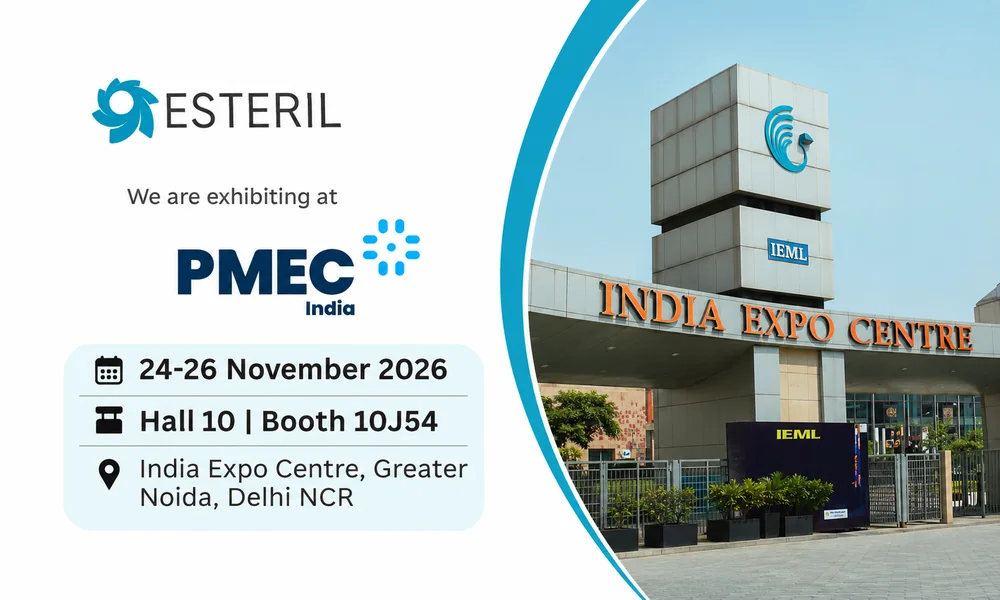
PMEC India 2026 runs from 24 to 26 November at the India Expo Centre and Mart (IEML), Greater Noida. This year it has its own venue for pharma machinery and process technology, separate from CPHI India, which runs from 23 to 25 November at Yashobhoomi, Dwarka. One visitor badge covers both venues, with shuttles running between them.
If you are going to shortlist suppliers for manufacturing vessels, holding vessels, CIP/SIP systems or process skids, three days goes quickly. Most booth conversations last ten minutes, and almost every supplier will tell you their equipment is cGMP compliant. The useful part is what you ask next.
This guide covers what to take with you, the questions that show real differences between suppliers, and how to compare them once you are back at your desk.
Before you go: take a one-page project brief
A supplier can only give useful answers if they know what you are making. Put these points on one page, printed or on your phone:
- Product and dosage form, for example SVP, LVP, ophthalmic or an oncology injectable
- Batch size and the working volumes you expect
- Process steps the system must handle: mixing, heating or cooling, holding, transfer, filtration
- How you plan to clean and sterilise: in-situ CIP/SIP, a separate CIP skid, or manual
- Utilities available at site: WFI, purified water, clean steam, compressed air, nitrogen
- Automation preference, including the PLC brand if your site has a standard
- The markets you supply and the inspections you expect: USFDA, EU GMP, WHO GMP, revised Schedule M
- Where the project stands: concept, URS drafted, or budget approved
If you already have a draft URS, take it with you. If not, our guide on how to write a URS for a sterile manufacturing vessel skid covers what to include.
Seven questions to ask at the booth
1. Where is the equipment fabricated and tested?
Ask whether fabrication, welding and testing happen in the supplier’s own facility or are subcontracted. Then ask if you can visit before placing an order. A supplier that runs its own shop controls weld quality, the schedule and the test set-up. One that subcontracts may still do good work, but you need to know who is actually building your system.
2. What does your FAT cover, and can I see a sample protocol?
The factory acceptance test is where you find problems while they are still cheap to fix. Ask which tests are run with water, which with simulated signals, and whether your team can witness them. Ask for a blank FAT protocol or a redacted report from a past project. Our article on FAT and SAT for pharmaceutical process skids lists what a complete FAT should include.
3. What documents come with the system?
For regulated equipment, the documents matter as much as the steel. Ask to see a document index: material certificates, weld logs and inspection records, surface finish reports, passivation records, P&IDs, as-built drawings, and IQ and OQ protocols. Also ask when you receive the editable drawings and the automation programs, and whether any conditions apply to that handover.
4. Who writes the automation, and how do you handle 21 CFR Part 11?
Ask whether the control system is designed in-house, which PLC and SCADA platforms the team works with, and how audit trails, user access and electronic signatures are set up. Ask how they follow GAMP 5 for software validation. If your site has a standard PLC brand, confirm it here rather than after the order.
5. Have you built this for a product like mine?
A supplier may not be able to name its clients, but it should be able to describe a similar project: the application, the capacity, the engineering problem and how it was solved. Ask what went wrong on that project and how it was fixed. A specific answer tells you more than a wall of client logos.
6. What happens after commissioning?
Ask about annual maintenance contracts, spares, response time for breakdowns, and whether an engineer can come on site. The equipment will run for many years after handover, so support counts as much as the build.
7. What would change the price and the delivery date?
No supplier can give a firm quote at a booth without your URS, and you should be careful with one that does. Ask instead what drives cost and lead time for a system like yours: material grade, surface finish, automation level, documentation scope and the number of FAT runs.
After the show: compare suppliers on the same points
Notes from three days of booths blur together. Fill in one table the same evening, while the conversations are still fresh.
| What to compare | Supplier A | Supplier B | Supplier C |
|---|---|---|---|
| Own fabrication and FAT facility | |||
| FAT scope and option to witness | |||
| Documentation package | |||
| Automation platforms and Part 11 approach | |||
| Similar projects described | |||
| After-sales support and AMC | |||
| Next step agreed |
Send your URS or brief to the two or three suppliers who gave the clearest answers, and ask for a technical proposal rather than a price alone. Our process skid procurement checklist helps keep the comparison consistent all the way to qualification.
Meet Esteril at PMEC India 2026
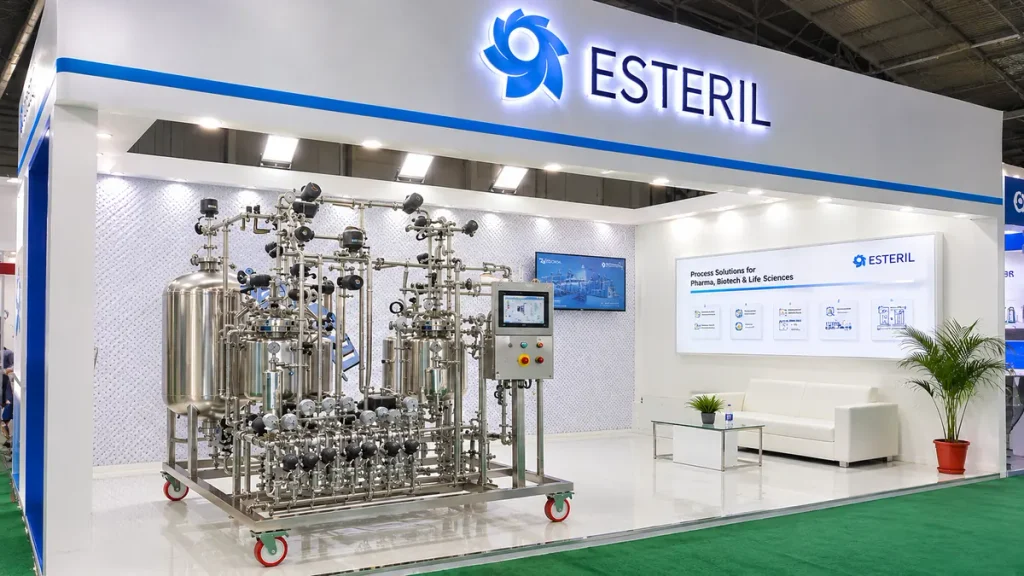
Esteril will be at PMEC India in Hall 10, Booth 10J54. Our team can talk through manufacturing vessels and skids, sterile holding vessels, in-situ CIP/SIP systems, complex process skids and automation for sterile and biopharmaceutical production. We design, fabricate and test at our own facility in Vasai, which includes a dedicated FAT area, so we can answer each of the questions above with examples from our own work.
If you would like a set time with one of our engineers, send us your project brief before the show. If you can’t make it to Greater Noida, do the same and we will set up a call.